Business
Daniel Harris
Why AOG Recovery Still Wastes Too Much Time Finding the Right Help
An AOG already creates a maintenance problem. The search for someone capable of fixing it should not become another one.
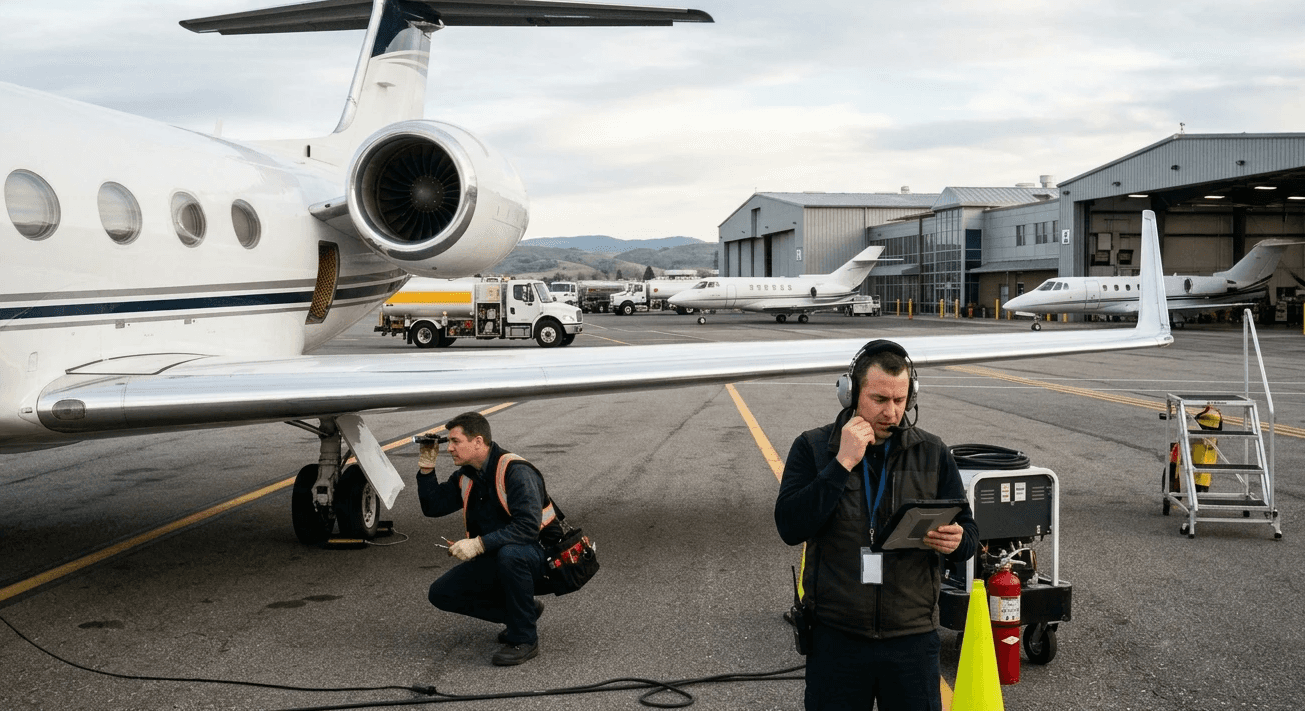
A business jet lands at a regional airport.
The aircraft is supposed to reposition later that day.
Instead, the crew discovers an issue that grounds the airplane.
Now several problems begin at once.
The passengers still need to move.
The aircraft needs diagnosis.
A maintenance provider needs to be found.
Parts may need to ship before cutoff.
Crew schedules may change.
Dispatch may be looking for recovery options.
The Director of Maintenance or maintenance controller is suddenly racing several clocks.
This is exactly when the industry's fragmented maintenance-provider network becomes expensive.
The Current Process
Doug Taylor describes the traditional AOG search process from years of running maintenance operations.
The team begins with whatever vendor database it has.
Maybe that is a spreadsheet.
Maybe it is a CRM.
Maybe it is a binder.
Maybe someone simply knows a provider near the airport.
The first company gets called.
Can you work on the aircraft?
When can someone arrive?
Tomorrow morning?
The maintenance controller writes down the answer.
Then calls the next provider.
Can you respond sooner?
What aircraft can you support?
The search continues.
Meanwhile, the aircraft is still down.
Location Is Only the Beginning
Finding an aircraft maintenance company nearby does not mean the problem is solved.
The provider needs to be appropriate for the aircraft and job.
Do they support the make and model?
Do they have the appropriate technicians?
Do they have the required tooling?
Can they perform the work needed?
Can the operator approve them?
Most importantly during an AOG:
Can they actually come now?
A general web search may answer the location question.
It usually cannot answer all of the operational questions at the same time.
Why Time Matters So Much
Maintenance teams do not have unlimited time to make these calls.
Parts shipping windows matter.
If troubleshooting takes too long, the operator may miss the opportunity to ship a required part that day.
That changes the recovery timeline.
The aircraft may remain down overnight.
Passenger recovery gets more expensive.
Crew and schedule disruptions grow.
The difference between finding a technician quickly and spending hours searching can create consequences far beyond the maintenance invoice.
Too Many People Are Solving the Wrong Problem
Doug describes maintenance controllers who should be troubleshooting but are instead searching for vendors.
Pilots may be photographing aircraft issues and coordinating with maintenance.
Dispatch may be handling passengers.
Parts departments may be preparing several possible components.
Everyone is busy.
But busy does not always mean the workflow is efficient.
The question is whether the information problem could have been solved before the AOG ever happened.
Static Databases Help but Do Not Finish the Job
An operator can maintain an excellent vendor list.
That still does not establish live availability.
A provider that helped two years ago may have changed.
The technician qualified on the aircraft may have left.
The tooling may no longer be available.
The mobile repair team may already be assigned elsewhere.
Or the opposite may be true.
A provider the operator does not usually use may already have a qualified mobile technician finishing another job ten minutes away.
A static database cannot easily show that.
The Better Workflow
Doug's ideal is simpler.
The operator identifies the AOG requirement.
Qualified providers in the relevant area receive the request.
Providers indicate whether they can respond and when.
The operator sees:
Who can support the aircraft
Who is available
When they can arrive
Relevant qualification information
Feedback from previous users
Instead of making sequential phone calls, the operator compares responses.
The maintenance professional gets time back.
That time can go toward troubleshooting, parts planning, aircraft recovery, and communication.
The Broader Lesson
Technology often gets discussed in aviation as a way to automate highly complex decisions.
Sometimes the biggest opportunity is much simpler.
Remove repetitive coordination.
Connect the right people faster.
Keep documents current.
Make the information easier to compare.
None of those eliminates maintenance professionals.
They give maintenance professionals more time to do maintenance work.
Key Takeaway
AOG response will never become completely predictable.
Mechanical failures happen.
Weather happens.
Parts become unavailable.
Technicians get busy.
But the search for qualified help does not have to remain as fragmented as the event itself.
The faster an operator can move from "Who can help?" to "Here is who can help," the faster the maintenance team can focus on the actual aircraft.
Hear Doug Taylor's full discussion about AOG recovery on the Ironbird Partners Podcast.
https://flyironbird.com/private_jet_podcast/finding-trusted-aircraft-maintenance-providers-is-hard


Contact
Get in touch with our team to learn more about Jet To and how we can make your private travel seamless