Business
Daniel Harris
The Hidden Risk of AI in Business Aviation: When Green Check Marks Create Bad Decisions
A flight can be legal yet unsafe. Here's why aviation leaders must understand the dangers of automation bias.
Artificial intelligence is becoming deeply embedded in business aviation.
Operators now have access to software that can monitor weather patterns, calculate crew legality, track maintenance events, predict delays, and identify operational risks faster than ever before.
For many companies, these tools represent a major competitive advantage.
But according to aviation operations expert Toby Benenson, there is a growing risk that deserves just as much attention as the technology itself.
That risk is not faulty software.
It is human behavior.
More specifically, it is the tendency for people to trust technology without fully questioning its conclusions.
In aviation, that phenomenon has a name: automation bias.
When Legal Doesn't Mean Safe
One of the most dangerous assumptions in aviation is that a flight is safe simply because every box has been checked.
Modern software excels at verifying compliance.
It can determine whether a crew is legal to fly.
It can confirm maintenance requirements.
It can verify aircraft availability.
It can analyze weather conditions.
It can generate a reassuring green check mark beside every category.
The problem is that aviation safety has never been determined solely by compliance.
A flight can meet every regulatory requirement and still present significant operational challenges.
The real world is rarely that simple.
The Aspen Example
Benenson discussed a scenario that illustrates this perfectly.
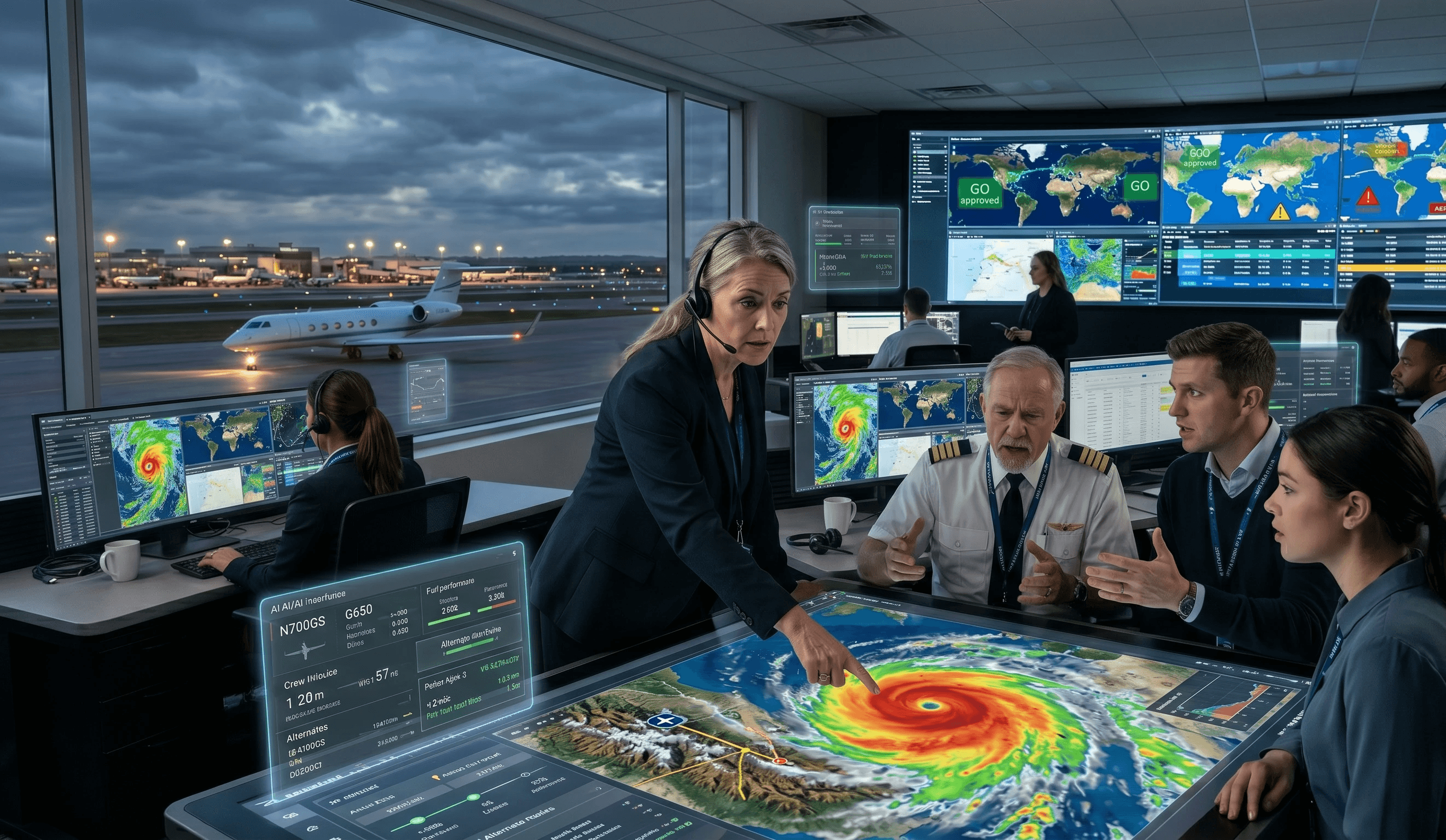
Imagine a flight scheduled into Aspen.
The weather forecast is deteriorating.
The crew is approaching duty limitations.
The first officer has limited experience operating into mountainous terrain.
Passengers expect an on-time arrival.
The aircraft remains technically legal to depart.
Every software system indicates compliance.
Every screen shows green.
Yet an experienced aviation professional may still decide that diverting to an alternate airport is the better decision.
Why?
Because judgment requires context.
The software can evaluate data.
It cannot fully understand the combination of factors that create operational risk.
That responsibility still belongs to people.
The Problem With Green Check Marks
Technology is incredibly effective at simplifying complex information.
The challenge is that simplified information can create a false sense of certainty.
When a system displays a green indicator, the human brain naturally interprets it as approval.
The flight is good.
The aircraft is ready.
Everything is fine.
But aviation is filled with situations where things appear acceptable until additional context is considered.
A legal crew may still be fatigued.
A weather forecast may technically meet minimums while creating significant operational challenges.
A maintenance item may not prevent dispatch but could increase complexity later in the day.
These situations require interpretation, not simply verification.
Why Operational Control Still Matters
Business aviation regulations place operational control in the hands of people for a reason.
The industry understands that responsibility cannot be delegated entirely to software.
When something goes wrong, investigators do not ask which application approved the flight.
They ask who made the decision.
They examine the information available at the time.
They evaluate whether sound judgment was exercised.
No software provider assumes legal responsibility for operational control.
The certificate holder does.
The director of operations does.
The chief pilot does.
The dispatcher does.
Technology may assist the decision.
Humans still own it.
The Next Challenge for Aviation Leaders
Many operators are focused on implementing AI.
Fewer are focused on governing it.
That distinction matters.
The companies that gain the greatest advantage from AI will not necessarily be the companies with the most technology.
They will be the companies that create clear frameworks defining where AI supports decision-making and where human oversight remains mandatory.
Technology should elevate judgment.
It should not replace it.
This requires leadership teams to answer difficult questions:
Which decisions can be automated?
Which decisions require human review?
How should employees challenge AI recommendations?
What happens when operational experience conflicts with software output?
These questions will become increasingly important over the next few years.
The Future of Aviation Is Not Fully Automated
The aviation industry has always embraced technology.
Modern aircraft themselves are proof of that.
But history consistently demonstrates that the safest operations occur when technology and human expertise work together.
AI can process data at extraordinary speed.
Humans provide context.
AI identifies patterns.
Humans evaluate consequences.
AI delivers recommendations.
Humans make decisions.
The future of business aviation is not about choosing between people and technology.
It is about creating systems where both complement one another.
Because when the weather deteriorates, the schedule changes, and unexpected problems emerge, passengers will not care how many green check marks appear on a screen.
They will care whether the right decision was made.
And that decision will still depend on human judgment.
Listen to the Full Episode
Want to hear Toby Benenson's complete insights on AI governance, operational control, automation bias, and the future of aviation decision-making?
Listen to the full Iron Bird Podcast episode: https://flyironbird.com/private_jet_podcast/why-aviation-still-needs-humans-in-the-age-of-ai
Episode Sponsors
✈️ Charter Flight Support
The only coverage in private aviation that protects you when an aircraft's mechanical issue stops your aircraft from flying.
Charter Flight Support not only provides financial protection when replacement aircraft cost more, but also helps locate and secure quality backup aircraft quickly.
Learn more at CharterFlightSupport.com.
📺 Video Valet
If in-flight experience matters, Video Valet delivers.
With access to over 1.2 million movies, shows, magazines, and newspapers, Video Valet provides fully customized iPads for private aircraft without the need for expensive Wi-Fi or additional hardware.
Mention Iron Bird and receive one free month of service.


Contact
Get in touch with our team to learn more about Jet To and how we can make your private travel seamless