Business
Daniel Harris
Why Aviation Still Needs Humans in the Age of AI
AI is changing aviation, but critical flight decisions still require human expertise, accountability, and judgment.
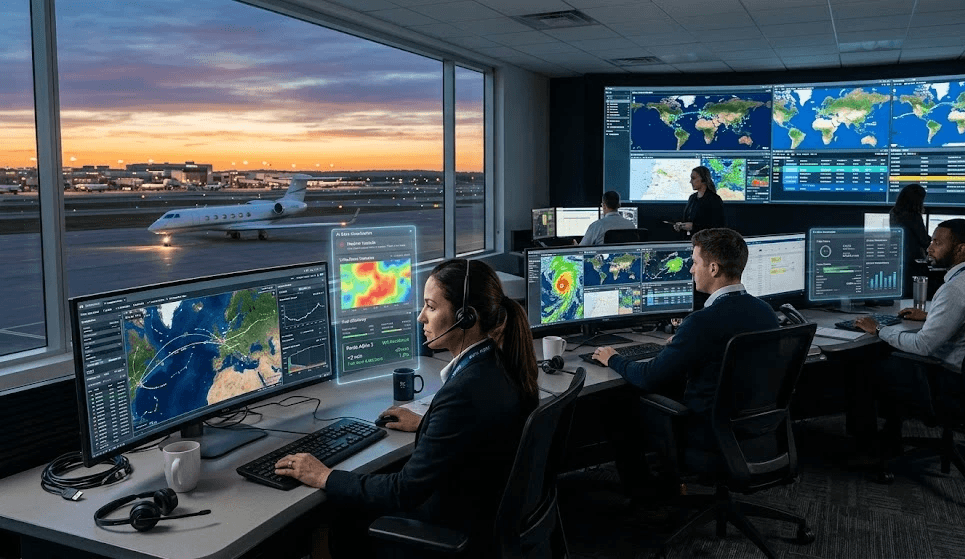
Artificial intelligence is rapidly changing the way aviation companies operate.
From flight scheduling and crew management to weather analysis and operational planning, modern tools can process information faster than any human ever could. Yet despite these advances, one truth remains unchanged:
The final responsibility for a flight still belongs to people.
That reality was at the center of Iron Bird's conversation with Toby Benenson, Founder of SayFlight and an aviation operations expert with nearly two decades of experience helping operators design safer and more effective operating models. According to Benenson, the industry's biggest challenge is not adopting AI. It is adopting AI responsibly.
Aviation Is Built on Judgment, Not Just Data
One of the most dangerous misconceptions about AI is the belief that access to more information automatically leads to better decisions.
In aviation, decisions rarely happen in ideal conditions.
Weather changes.
Crew members time out.
Maintenance issues appear unexpectedly.
Customers apply pressure.
Aircraft owners want exceptions.
The regulations may be clear, but real-world operations are often messy.
Benenson explains that most operators have detailed procedures documented, but very few have documented how decisions are actually made under pressure.
That distinction matters.
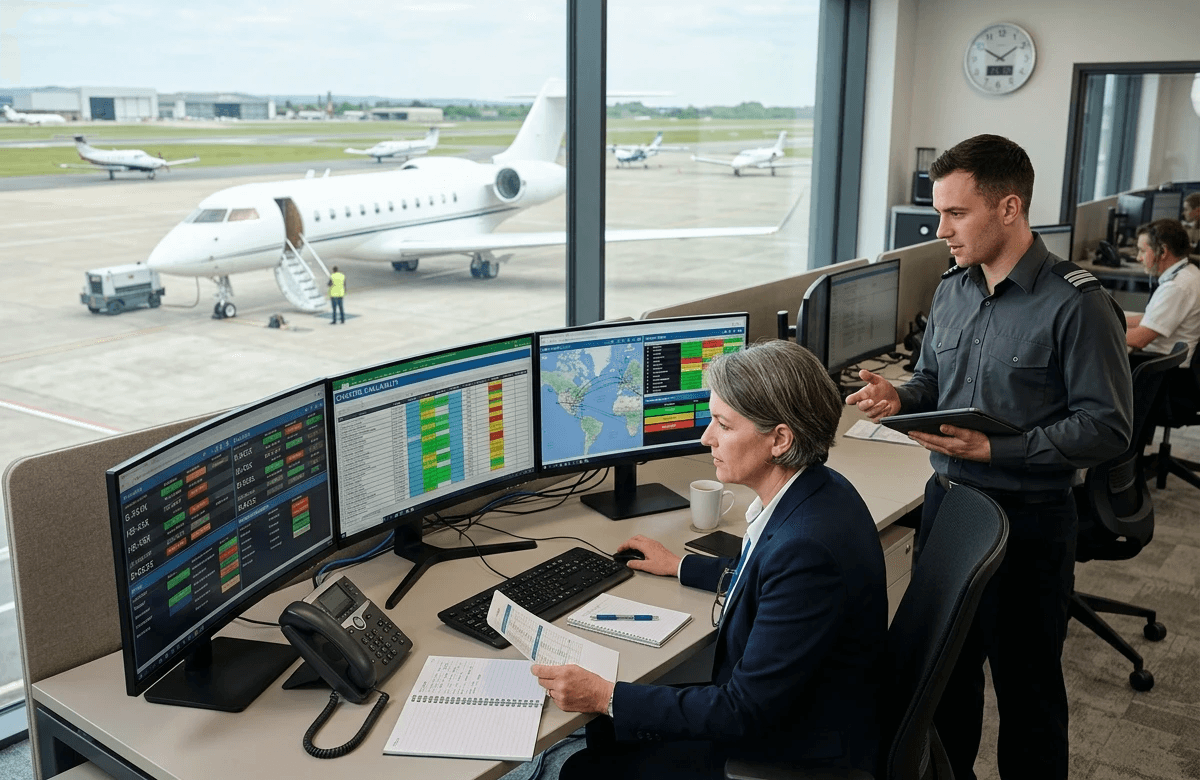
A manual can tell a dispatcher how to release a flight. It cannot always explain how to handle five conflicting variables at two in the morning when time is running out and every option carries risk.
That is where human judgment becomes irreplaceable.
The Aspen Scenario
Benenson shared a real-world example that perfectly illustrates the challenge.
A flight is scheduled into Aspen. The weather forecast becomes marginal the day before departure. Dispatch flags the issue. Sales communicates with the broker. The broker decides to wait.
The next morning, conditions remain legal but questionable.
The crew is approaching duty limits.
The first officer has limited Aspen experience.
The passengers are expecting to arrive on schedule.
Meanwhile, another aircraft appears to be operating into Aspen without issue.
On paper, every system may show green lights.
Yet experienced aviation professionals may still decide the safest option is to divert to Rifle instead.
That decision is not based on a single data point.
It comes from experience, context, pattern recognition, and an understanding of risk that cannot be fully captured by software.
The Danger of Automation Bias
Modern systems are excellent at checking compliance.
They can verify crew legality.
They can calculate duty times.
They can confirm maintenance status.
They can analyze weather.
What they cannot do is fully understand operational context.
Benenson warns about what he calls automation bias: the tendency for humans to trust system outputs simply because a computer generated them.
A green check mark does not mean a good decision.
A flight can be technically legal while still carrying elevated operational risk.
If dispatchers begin relying exclusively on software recommendations, they risk replacing judgment with compliance.
The two are not the same thing.
Human Accountability Is Not Going Away
One of the most important points from the discussion is that regulations have not changed simply because AI exists.
Operational control remains a human responsibility.
The FAA still expects certificate holders, directors of operations, chief pilots, and authorized personnel to exercise judgment when making flight decisions.
If an accident occurs, investigators will not accept "the software told us it was okay" as a defense.
They will ask:
Who made the decision?
Why was the decision made?
What information was considered?
Who had operational authority?
Those questions ultimately point back to people.
Not machines.
The Future Is Human-AI Collaboration
None of this means AI should be avoided.
Quite the opposite.
AI has enormous potential to help operators process information faster, identify risk earlier, and eliminate repetitive administrative work.
The goal is not replacing humans.
The goal is empowering them.
When used correctly, AI can surface critical information that allows aviation professionals to make better decisions. It can reduce workload, improve situational awareness, and create consistency across operations.
But judgment, accountability, and operational control must remain firmly in human hands.
That is not a limitation of technology.
It is a requirement of safety.
Why This Matters
Business aviation is entering a new era in which technology will be deeply integrated into everyday operations.
The operators who succeed will not be the ones who automate everything.
They will be the ones who understand exactly what should be automated and what should never be.
Because at the end of the day, passengers are not trusting an algorithm.
They are trusting the people responsible for getting them safely to their destination.
And that responsibility can never be outsourced.
Listen to the Full Episode
Want to hear Toby Benenson's complete insights on AI governance, operational control, decision architecture, and the future of business aviation?
Listen to the full Iron Bird Podcast episode: https://flyironbird.com/private_jet_podcast/why-aviation-still-needs-humans-in-the-age-of-ai
Episode Sponsors
✈️ Charter Flight Support
The only coverage in private aviation that protects you when an aircraft's mechanical issue stops your aircraft from flying.
Charter Flight Support not only provides financial protection when replacement aircraft cost more, but also helps locate and secure quality backup aircraft quickly.
Learn more at Charter Flight Support
📺 Video Valet
Video Valet delivers customized in-flight entertainment solutions for private aircraft.
With access to over 1.2 million movies, TV shows, magazines, and newspapers, passengers enjoy a premium entertainment experience without the need for expensive Wi-Fi.
Learn more at Video Valet


Contact
Get in touch with our team to learn more about Jet To and how we can make your private travel seamless